
Expert surgeons
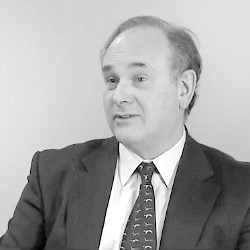
Mr Paul Rosen
BSc(Hons), MB ChB, FRCS, FRCOphth, MBA
Consultant Ophthalmic Surgeon
Eye surgery available in London and the Southeast
This eye treatment is available in:
Laser Eye Surgery
The Problem
More than 3 out of 5 adults in the UK wear glasses (65%) or contact lenses (8%) to correct refractive errors.
We refer to refractive errors as short-sightedness, long-sightedness, or astigmatism. Their medical names are myopia, hyperopia, and astigmatism.
Many people are happy with their glasses or contact lenses in the last 2 decades advances in surgical techniques have proven to be an attractive alternative.
The refractive process in your eye is like the way a camera takes a picture. The cornea and lens in your eye act as the camera lens focusing rays of light on the retina which is like the photographic film. The image your retina “sees” is transmitted to your brain, which interprets the image. If the picture is not focused, the retina (or film) transmits a blurred image to the brain.
Myopia (Shortsightedness)
People with myopia or shortsightedness have an eye which is too long or a cornea that is too curved. The cornea is the transparent window at the front of the eye. That’s important because we tend to treat the cornea when we correct refractive errors. An elongated eye or a cornea that is too curved results in you seeing distant objects as blurry.
Blurriness happens because the lens focuses the image in front of the retina. You may be able to see close objects with clarity. You can likely read without glasses.
Myopia affects about a third of the adult population. At present, the majority of all laser eye surgery patients are myopic.
In presbyopic patients, we may advise treating shortsightedness by exchanging your natural lens with an artificial lens. We call that procedure Lens Replacement.
Hyperopia (Longsightedness)
Hyperopia, or long-sightedness, is the opposite of myopia. You can see distant objects, but close-up objects appear blurred. Hyperopia results from an eyeball that is too short or a cornea that is too flat. Your cornea focuses images on a point behind the retina. LASIK or Laser Eye Surgery may help people with longsightedness too.
In presbyopic patients, we can treat longsightedness by exchanging your natural lens with an artificial lens. We call that procedure Lens Replacement.
Astigmatism
Astigmatism is a condition in which an uneven curvature of your cornea blurs and distorts both distant and near objects. A normal cornea is round, with even curves on all sides, like a football.
The astigmatic cornea is more like a rugby ball, curved more in one direction than in another.
That uneven curvature causes light rays to have two focal point neither of which focuses clearly on the retina, blurring the visual image.
Most people have a slight degree of astigmatism, but a significant number need spectacle or contact lens correction to see clearly. Advances in technology and techniques allow us to correct astigmatism with LASIK.
The Treatment
Laser eye surgery treatment for shortsight, longsighted and astigmatism has many variants. In this page, we’ll discuss the most popular option: LASIK. LASIK is one of the most amazing technological breakthroughs in eye care in past decades.
Using a cold, high-precision laser beam, we program the laser to remove a microscopic layer of the cornea. The laser alters the cornea’s curvature to correct your spectacle or contact lens prescription.

The LASIK Procedure Step 1
As part of the LASIK procedure, the surgeon creates a thin corneal ‘flap’ using a femto laser and folds it back with care.
The LASIK Procedure Step 2
We use the excimer laser to reshape the middle tissue layer of the cornea. We’ve programmed the exact amount into the laser to correct your prescription. Then, we remove approximately 10-12 microns of tissue for each dioptre of myopia treated.
The LASIK Procedure Step 3
We then replace the corneal ‘flap’ to its original position. Like moist cling film, it adheres and seals itself without the use of stitches. The flap protects the treated area of your cornea and helps reduce discomfort.
Femtosecond Laser Eye Surgery
Recent developments femtosecond lasers have enhanced standard LASIK by making it an all-laser procedure.
In conventional LASIK, we create the corneal flap a surgical blade. We now can create the flap with a femtosecond laser. The laser creates a layer of tiny bubbles at a precise depth in the cornea. We can then lift the layer of tissue above the bubbles. We then apply an excimer laser to reshape the exposed cornea to achieve the desired correction.
The advantage of femtosecond LASIK over standard LASIK is that it allows us to create a much thinner corneal flap. This greater precision provides a smoother layer of exposed cornea to which we apply the treating laser.
The greater accuracy at which the femtosecond laser creates the flap ensures that we retain the largest amount of corneal tissue. More corneal tissue enhances long-term stability of the eye. Many complications arising from Laser Eye Surgery were as a result of cutting the cornea with a blade. We can now create the flap without these potential complications.
The Results
Each laser pulse removes 0.25 microns of corneal tissue or 1/400 of a mm. Because of the laser’s precision, we can reduce or eliminate damage to healthy, adjoining tissue. Among LASIK’s advantages are that visual recovery is rapid and it is painless.
Get in touch
The best way to figure out your options is to give us a call on: 01865 513 483 and we can help answer any questions you have
As seen in









What patients say
Frequently asked questions
Weekly eye treatment updates
We regularly share updates and video blog posts on the most common eye treatments